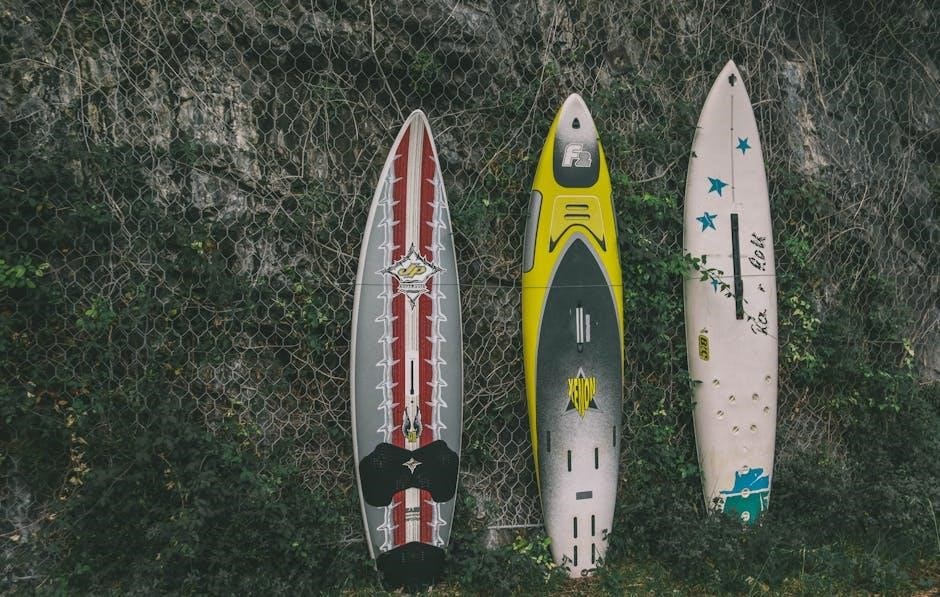
Surfboard Dimensions Guide: A Comprehensive Overview (Updated 04/07/2026)
Today, April 7th, 2026, at 12:23:40, we delve into surfboard dimensions – crucial for performance․ A surfboard, a lightweight plank, is essential equipment for the exhilarating water sport of surfing;
Understanding surfboard dimensions is paramount for any surfer, from complete beginner to seasoned professional․ These measurements – length, width, and thickness – aren’t arbitrary numbers; they fundamentally dictate how a board performs in the water, influencing everything from stability and paddle speed to maneuverability and wave-catching ability․
The surfboard itself, as a core piece of surfing equipment, resembles a streamlined, lightweight plank designed for optimal buoyancy and control․ Choosing the right dimensions means matching the board to your weight, skill level, and the type of waves you intend to ride․ A poorly sized board can hinder progress and make surfing unnecessarily difficult, while a well-matched board unlocks a world of enjoyment and progression․
This guide will break down each key measurement, explaining its impact and providing recommendations to help you find the perfect surfboard for your needs․ We’ll explore how these dimensions vary across different board types, ensuring you have the knowledge to make an informed decision․
Key Surfboard Measurements Explained
Three primary measurements define a surfboard’s characteristics: length, width, and thickness․ Each plays a distinct, yet interconnected, role in determining the board’s overall performance․ Length, measured from nose to tail, significantly impacts paddle speed and stability, with longer boards generally offering more of both․ Width, typically measured at the widest point, influences buoyancy and maneuverability; wider boards provide greater stability, while narrower boards are more responsive․
Thickness, measured from the deck to the bottom, contributes to volume and buoyancy․ A thicker board offers more floatation, making it easier to paddle and catch waves, but can reduce responsiveness․ These measurements aren’t viewed in isolation․ They work together to create a specific volume, expressed in liters, which is a crucial indicator of how much a board will float and how easily it will paddle․
Understanding these core measurements is the first step towards selecting a surfboard that complements your surfing style and abilities․
Length: The Foundation of Performance
Surfboard length, measured from nose to tail, is arguably the most fundamental dimension․ It profoundly influences a board’s paddling speed, stability, and wave-catching ability․ Longer surfboards, typically exceeding 9 feet, excel in smaller, weaker waves, offering exceptional paddle power and ease of wave entry․ They are favored by beginners and longboard enthusiasts․

Conversely, shorter boards, often under 7 feet, prioritize maneuverability and responsiveness, ideal for experienced surfers tackling steeper, more powerful waves․ They require more skill to paddle and catch waves but allow for tighter turns and more radical maneuvers․ The length also affects the board’s overall volume and how it distributes that volume along its shape․
Choosing the right length depends heavily on your weight, skill level, and the types of waves you intend to surf․ It’s the cornerstone of performance․
Width: Stability and Maneuverability
Surfboard width, measured at its widest point, significantly impacts both stability and maneuverability․ A wider board provides a more stable platform, making it easier to paddle, stand up, and maintain balance – particularly beneficial for beginners or those surfing smaller waves․ Increased width enhances buoyancy and forgiveness;

However, wider boards generally sacrifice some maneuverability․ Narrower boards, conversely, offer greater responsiveness and allow for quicker, tighter turns․ They demand more precise footwork and are favored by experienced surfers seeking high-performance surfing․ The width is often considered in relation to the board’s length; a wider nose, for example, can aid in paddle speed․
Finding the right width involves balancing these competing factors, tailored to your skill level and preferred surfing style․ It’s a crucial element in overall board feel․
Thickness: Volume and Buoyancy

Surfboard thickness, typically measured in inches, is a key determinant of a board’s volume and, consequently, its buoyancy․ A thicker board displaces more water, providing greater floatation and making paddling easier․ This is particularly advantageous for beginners, heavier surfers, or those surfing waves with less power․
However, increased thickness can also reduce responsiveness and make the board feel less connected to the water; Thinner boards offer enhanced sensitivity and allow for more precise control, but require more effort to paddle and maintain stability․ The distribution of thickness – whether consistent or varying along the board’s length – also influences performance characteristics․
Thickness works in conjunction with length and width to define the overall volume, impacting how the board sits in the water and responds to wave energy․ It’s a critical factor in matching a board to a surfer’s weight and skill․
Volume Explained: Liters and Their Significance
Surfboard volume, measured in liters, represents the total amount of water a board can displace․ It’s arguably the most crucial dimension for determining a board’s floatation and suitability for a surfer’s weight and skill level․ Unlike simply considering length, width, and thickness individually, volume provides a comprehensive understanding of a board’s buoyancy․
A higher volume board offers greater stability and easier paddling, ideal for beginners or those surfing smaller waves․ Lower volume boards are more maneuverable and responsive, favored by experienced surfers tackling steeper, more powerful conditions․ Volume isn’t just about size; it’s about the distribution of that volume․
Understanding liters allows surfers to accurately compare boards of different shapes and sizes, ensuring they choose a board that provides the optimal balance between floatation, control, and performance․
Calculating Surfboard Volume
Determining a surfboard’s volume isn’t as simple as multiplying length, width, and thickness․ While those dimensions are foundational, the shape of the board significantly impacts the final liter measurement․ Historically, shapers relied on estimations and experience, but modern methods offer greater precision․
The most accurate way to calculate volume involves using specialized software or online calculators that require detailed input – length, width at various points, thickness at multiple locations, and even rocker measurements․ These tools essentially slice the board into numerous sections, calculate the volume of each, and sum them for a total․
Simplified formulas exist, but they provide approximations․ For a rough estimate, multiply length x width x thickness and then multiply by 0․5․ However, remember this is a basic calculation and doesn’t account for complex board contours․
Volume Recommendations Based on Weight & Skill
Matching surfboard volume to your weight and skill level is paramount for optimal performance․ Beginners generally require higher volume boards – providing stability and ease of paddling․ A good starting point is to multiply your weight in pounds by 0․6 to determine a minimum volume in liters․
Intermediate surfers can reduce volume as their skills progress, aiming for a ratio of weight x 0․5․ This allows for increased maneuverability while still maintaining sufficient buoyancy․ Advanced surfers, possessing refined technique and strength, often opt for lower volume boards (weight x 0․4 or less) for maximum responsiveness․
These are guidelines; individual factors like fitness level, surfing style, and wave conditions also play a role․ Heavier surfers naturally need more volume, while those surfing powerful waves may prefer a board that’s easier to control․

Surfboard Dimensions for Different Skill Levels
Selecting the right surfboard dimensions hinges on your surfing proficiency․ Beginners benefit from longer, wider, and thicker boards – typically longboards or foam tops – offering exceptional stability and paddling power․ Lengths around 9’0” and widths exceeding 22” are common, with generous volume for easy wave catching․
Intermediate surfers transition to shorter, narrower boards, like funboards or hybrids, around 7’0” to 8’0”․ These provide a balance between stability and maneuverability, allowing for turns and more dynamic surfing․ Volume decreases as skill improves․

Advanced surfers favor shortboards, often under 7’0”, prioritizing performance and responsiveness․ These boards demand precise technique and offer maximum control in steeper, more challenging waves․ Dimensions are highly customized based on individual preferences and wave type․
Beginner Surfboard Dimensions
For those new to surfing, prioritizing stability and ease of paddling is paramount․ Longboards, ranging from 9’0” to 9’6” in length, are ideal․ Widths should exceed 22”, providing a broad platform for balance․ Thickness is also crucial; aim for boards 3” or thicker to maximize volume and buoyancy․

Foam top surfboards, often referred to as “soft tops,” are another excellent choice․ These offer similar dimensions to longboards but with a safer, more forgiving construction․ Volume, generally exceeding 70 liters, ensures effortless paddling and wave catching․
Beginners should avoid narrow or thin boards, as these require more skill and strength to control․ A larger board allows for a more relaxed learning curve, fostering confidence and accelerating progress․ Remember, a stable board is a happy board!
Intermediate Surfboard Dimensions
As surfers progress beyond the basics, a shift towards more maneuverable boards is natural․ Funboards, typically between 7’0” and 8’0” in length, offer a great transition․ Widths around 21” to 22” maintain some stability while allowing for tighter turns․
Thickness should decrease slightly, around 2․25” to 2․5”, reducing volume but still providing adequate floatation․ This encourages more responsive surfing․ Hybrids, blending longboard and shortboard characteristics, are also popular choices․
Volume in the 50-65 liter range is generally suitable, depending on the surfer’s weight and skill level․ Intermediate surfers can begin experimenting with different tail shapes and fin setups to refine their performance․ The goal is to find a board that balances stability with maneuverability, allowing for continued progression․
Advanced/Professional Surfboard Dimensions
For experienced surfers and professionals, performance is paramount, demanding highly refined board dimensions․ Shortboards dominate this category, typically ranging from 5’10” to 6’8” in length, prioritizing radical maneuvers․
Widths narrow to 18․5” ─ 19․5”, minimizing drag and maximizing responsiveness․ Thickness is significantly reduced, often between 2․0” and 2․25”, creating a low-volume board for advanced control․ Volume generally falls between 26-35 liters, requiring substantial paddling strength and wave-reading ability․
Advanced surfers often customize dimensions based on wave type and personal preference․ Tail shapes become critical – squash, pin, or rounded – influencing drive and release․ Fin setups are meticulously chosen for optimal performance․ These boards demand precision and a deep understanding of surfing dynamics․
Surfboard Dimensions by Surfboard Type
Surfboard dimensions vary dramatically depending on the board’s intended purpose and design․ Each type caters to different skill levels and wave conditions, influencing length, width, thickness, and volume․
Shortboards, for aggressive maneuvers, typically range from 5’6” to 6’8” with widths of 18․5” to 20” and volumes around 25-32 liters․ Longboards, prioritizing stability and glide, are generally 9’ to 12’ long, 22” to 24” wide, and boast volumes of 60-80+ liters․
Fish surfboards, known for speed and maneuverability in smaller waves, feature wider widths (20” ─ 22”) and shorter lengths (5’0” ─ 6’0”), with volumes around 30-40 liters․ Hybrid boards blend characteristics, offering versatility; dimensions fall between shortboards and fish, adapting to diverse conditions․
Shortboard Dimensions
Shortboards are the high-performance workhorses of surfing, designed for radical maneuvers and speed․ Their dimensions reflect this focus, prioritizing responsiveness over stability․ Typically, shortboards fall within a length range of 5’6” to 6’8”, though variations exist․
Widths generally span from 18․5” to 20”, influencing rail-to-rail transitions and drive․ A narrower width enhances maneuverability, while a wider width provides more stability․ Thickness is usually between 2․25” and 2․75”, impacting buoyancy and responsiveness․

Volume is a critical factor, generally ranging from 25 to 32 liters․ This volume is heavily influenced by the surfer’s weight and skill level․ Lower volumes suit experienced surfers seeking maximum performance, while higher volumes offer more paddle power and forgiveness․
Longboard Dimensions
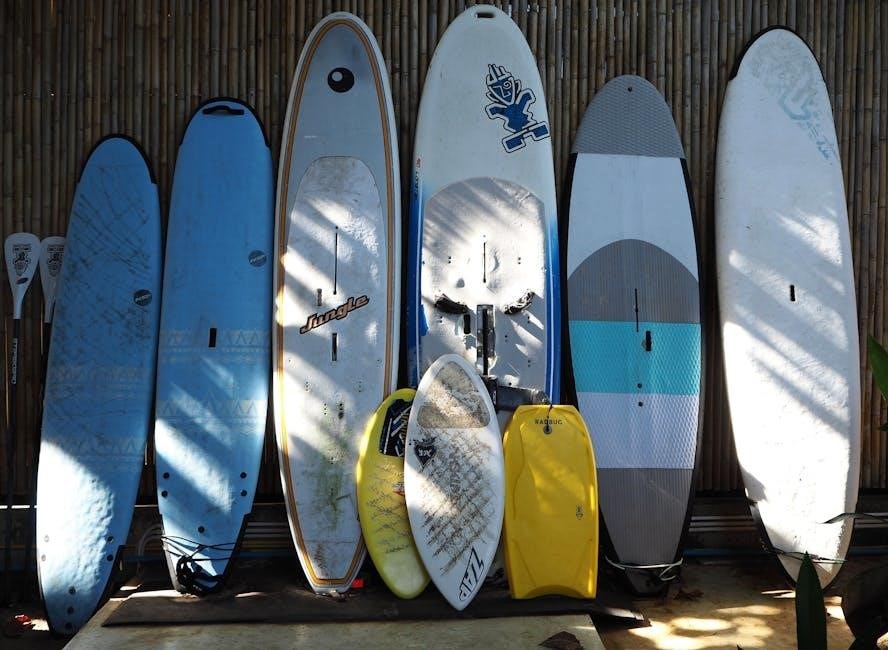
Longboards embody the classic surfing experience, prioritizing glide, stability, and wave-catching ability․ Their dimensions are significantly different from shortboards, reflecting this distinct purpose․ Typically, longboards range in length from 8’0” to 12’0”, offering a broad spectrum for various conditions and rider preferences․
Widths are generally wider, falling between 22” and 24”, providing exceptional stability and a larger platform for walking the board․ Thickness usually ranges from 2․5” to 3․5”, contributing to increased volume and buoyancy․
Volume is a key characteristic, often exceeding 60 liters and reaching upwards of 80 liters or more․ This substantial volume makes paddling easier and facilitates catching smaller waves․ Longboards are ideal for beginners and those seeking a relaxed, traditional surfing style․
Fish Surfboard Dimensions
Fish surfboards are renowned for their speed, maneuverability, and ability to excel in a wide range of conditions․ Characterized by a wider outline and a shorter length compared to traditional boards, they offer a unique surfing experience․ Typically, fish boards fall within a length range of 5’4” to 6’8”, making them quite compact․
Widths are noticeably broader, often between 19” and 22”, contributing to increased planing surface and speed․ Thickness generally ranges from 2․25” to 2․75”, balancing volume with responsiveness․
Volume typically falls between 30 and 45 liters, providing enough buoyancy for easy paddling while maintaining a lively feel․ The distinct swallowtail or diamond tail shape further enhances maneuverability․ Fish boards are a versatile choice for intermediate to advanced surfers seeking a fun, high-performance ride․
Hybrid Surfboard Dimensions
Hybrid surfboards represent a fusion of design elements from various board types, aiming to deliver versatility and performance across diverse wave conditions․ These boards blend characteristics of shortboards, fish, and even longboards, resulting in a unique riding experience․ Lengths generally range from 5’8” to 6’10”, offering a balance between maneuverability and paddle power․
Widths typically fall between 18․5” and 21”, providing a stable platform for various maneuvers․ Thickness usually ranges from 2․25” to 2․6”, carefully calibrated to optimize volume and responsiveness․
Volume can vary significantly, typically between 32 and 48 liters, depending on the specific hybrid design and intended use․ Tail shapes are diverse, including squash, swallow, and rounded pins․ Hybrids are excellent for surfers seeking a single board to handle a wide spectrum of waves․
Fin Setup and its Relation to Dimensions
Fin setup profoundly impacts how a surfboard interacts with the water, and it’s intrinsically linked to the board’s dimensions․ Shorter, wider boards (like shortboards) often utilize a thruster (three-fin) setup for control and drive, benefiting from increased surface area for grip․
Longboards, with their greater length and width, frequently employ a single fin or a 2+1 setup, maximizing glide and smooth turns․ Fish surfboards, known for their wider outline, often pair well with a twin-fin configuration, enhancing speed and looseness․
Hybrid boards offer flexibility, accommodating thruster, twin, or quad fin setups depending on desired performance characteristics․ Fin size and placement also matter; larger fins provide more hold, while smaller fins offer greater maneuverability․ Careful consideration of fin setup, in relation to board dimensions, is crucial for optimizing performance․